
 |
Cricket Legged Baboon
Hysterocrates apostolicus
|
|
Range: The island of Sao
Tome, collected specifically from the north end of the island. |
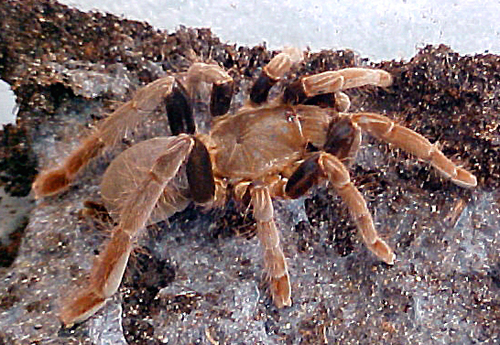
 While HYsterocrates makes an incredible threat display when annoyed, it also defends itself with the "knees" over the eyes maneuver. |
 "Bye!" Here's the usual scene once a light is turned on. Note the size of the tarsus and metatarsus. |
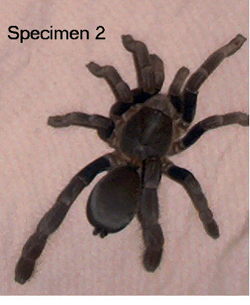 This is a juvenile at about the time when I started noticing the unique rear legs. |
|
Ideal Setup: A container of 3-10 gallon capacity for an adult (they will make use of a large container) with ample substrate for digging. I prefer a mix of our local alluvial clay, peat moss, and a bit of vermiculite. They make the most fantastic and study "mines" with it. In the wild, they enjoy the easily packed, ruddy brown and rich volcanic soil of Sao Tome. While they live on a rainy island, don't make it swamp. Keep humidity about 70% (if the substrate stays moist, but not so wet that that you can squeeze water out of it with your hand, you're good). Keep a full water dish, and temps about 75-80 degrees Fahrenheit year round. Food: Any bugs that haven't been exposed to pesticides (equivalent of 3-5 crickets a week for adults), small lizards, etc. Hysterocrates are great feeders and fast growers, but you may have to simply put the prey in he container in the evening and ensure it has disappeared the following day. As it is kept fairly humid and warm, remove remains promptly and check frequently for undesired mites and fungus. |
© 1999-2016 Eight. All rights reserved.